by Urooj Ali
Category: Uncategorized
by, Urooj Ali, Jalisha Gause, and Tori Thompson
by Urooj Ali
by Urooj Ali
by Urooj Ali
Ding…ding…ding… The door jingles with each attendee’s entrance. The aroma of espresso and dark roast infuses the air, and the people’s chattering cuts through the silence. The rustling of cardboard boxes filled with clothes indicates the start of the programming. Participants and organizers place their items for the clothing swap at the front of the room and prepare for the presentation. “Welcome to GAMVP AND GIPL’s clothing swap y’all!” Hibah addresses the room, and starts the conversation. “How many of y’all have attended a clothing swap before?” A few hands shoot up, and the excitement in the room is visible. Attendance for this event is lower than expected, but that may be a general indicator of how the public is feeling at the moment.
This election year, organizations like Georgia Muslim Voter Project (GAMVP), anticipate higher levels of voter apathy among young voters. Due to many factors, youth voters are succumbing to “doomism.” “Doomism refers to the belief that it is now too late to take ameliorative action to avert catastrophic climate change. The end result of this view is comparable to the result of climate skepticism; doomism produces inaction.” 1
Fast fashion contributes significantly to the climate crisis. Young voters experience fast fashion through the quick turnaround of trends on social media and retailers such as Shein, Temu, H&M, and more. “Hauling fast fashion to dumps and incinerators is costing our country more than $4 billion a year and contributing to climate change and other environmental challenges.”2 Not only is fast fashion a factor of the climate crisis, it also creates poor mental health and financial situations for young voters.The fast-changing trends and the need to get the latest items make people envy others and often lead to poor financial choices by giving in to the pressure.3
Young voters really care about climate change, environmental issues, and ethical consumption. In 2020, Circle found that 31% of youth (18-29) named that the environment and climate change are issues that drive their civic engagement.Voters are hyper aware of these issues, but have yet to see positive change, therefore are less likely to participate in civic engagement.4 With this in mind, Hibah Berhanu, GAMVP, reached out to Ayesha Abid at Georgia Interfaith Power and Light (GIPL) to collaborate on an event that would introduce local solutions to large problems and encourage folks to hit the polls this Fall. Young people are less likely to turnout for elections. Social pressure is a great motivator for young people to vote in elections.5 The collaboration resulted in the Eco-Clothing swap event, held on June 9 at Black Coffee Co.
Black Coffee Co. is a Black owned coffee shop in Jonesboro, Georgia. Upon entering the shop, entrants lock eyes with prominent progressive political figures in a mural on the wall, while the scent of freshly ground coffee envelops them. From civil rights leader John Lewis to Stacey Abrams, the mural evokes a feeling of empowerment in everyone that walks through the the glass doors. The space buzzes with pride and joy, complemented by live plants and plenty of seating. Everyone is home at Black Coffee Co, making it the perfect setting for the Eco-clothing swap.
Berhanu and Abid passionately fight for environmental justice. “It’s really important for me to represent my Muslim values in how I act, how I practice my faith, and taking care of the planet is just one manifestation of me practicing my faith.” Hibah Berhanu shares.
Co-organizer, Ayesha Abid is no stranger to doomism, “I tend to be a little bit negative, and think ‘There’s nothing that’s going to be solved in this world if I and others like me don’t step up to the plate, because no one else is going to.’” Even though she has a hard time seeing an end to the climate crisis, she stays optimistic and believes she can make a difference and help others do the same.
Ayesha’s optimism and Hibah’s faith combined created the Eco-Clothing swap. “Clothing Swaps foster community building, connection, and sustainability.” 6These events remind community members of the positivity around them, and the steps they can take to eradicate waste. This event was all about bringing people together to share info on civic engagement and the upcoming elections. Studies show that “…civic engagement as a tool for coping with adversity or systemic oppression. Civic engagement demonstrates a heterogeneous relationship to well-being.”7 It is evident that social issues are connected to civic engagement and mental health. During the event a participant, Madiha Abid, shared wonderful insight about the interconnectedness of the climate crisis, mental health, and civic engagement. Madiha is a behavioral therapist by trade, and works to make mental health resources more accessible for Black and Brown communities.
Madiha shared how nature and green spaces are becoming less and less accessible for the working class and lower income communities. “They are building high rises and townhomes on every piece of land possible, and nowadays it costs an arm and a leg to go to the beach. Our people are drowning in a sea of gray.”
Madiha’s sentiments resonated with many people in the group, leading Hibah to step up. “We deserve access to beaches and parks, and as custodians of our planet it is our responsibility to take action.” Georgia’s youth voter turnout decreased by 7% between 2018 and 2022. Even though youth turnout has been declining, it’s crucial to show young people that voting is actually in their best interest, as they have the power to influence elections. “Young people continue to prove that they’ll turn out to vote to influence election results and have an impact on issues they care about,” says Abby Kiesa, CIRCLE’s deputy director.8
The eco-clothing swap served two purposes: to remind youth voters that community solutions work, and also to remind them that we need to take civic action as well by voting and speaking to our elected officials. The monotony of everyday life continues to decrease motivation for change, and that was visible with this crowd. People are hungry for change and human connection, and this Eco-clothing swap provides a space for both of those things.
“Let’s swap clothes y’all!” Hibah closed out the discussion and directed everyone to the table with different clothing items on display. A sea of color and texture sat upon the long table surrounded by plants. Slowly, participants approached the table, shyly browsing the selection. “Please feel free to grab anything that fits your style! The remaining items will be donated to a local women’s shelter.” Ayesha encouraged the attendees to look thoroughly. With this encouragement, folks moved quicker towards the table.
“Oh this is so cute!” an attendee exclaimed.
“I’ve been looking for a chunky knit sweater like this,” Hibah shared.
With that, the table was cleared in no time, and attendees left the coffee shop with new pieces to complement their existing wardrobes.
The rise of doomism and voter apathy will not end after 2024, if anything they may become worse. GAMVP and GIPL work on creating programs that fit their audience, making sure communities in Georgia stay involved and keep fighting for their rights, whether it’s in big ways or small.
The Eco-clothing swap is just one facet of the programming these two organizations conduct. GIPL offers sustainability resources to religious communities across the state, making it easy for them to get involved in composting, recycling, and energy-saving projects.
GAMVP considers the political landscape and hosts an array of events that encourage Georgia Muslim communities to vote, advocate at the state capitol, and participate in grassroots organizing work.
These organizations are using their resources to empower communities. They plan to continue these efforts as long as they are necessary.
- https://open.library.ubc.ca/soa/cIRcle/collections/ubctheses/24/items/1.0431311 ↩︎
- https://thehill.com/opinion/congress-blog/4140647-congress-cant-be-slow-to-address-fast-fashion/ ↩︎
- https://ualresearchonline.arts.ac.uk/id/eprint/7332/1/ACEI2014-50.pdf ↩︎
- https://circle.tufts.edu/latest-research/youth-concern-about-climate-change-drives-civic-engagement ↩︎
- Bergan, D. E., Carnahan, D., Lajevardi, N., Medeiros, M., Reckhow, S., & Thorson, K. (2022). Promoting the Youth Vote: The Role of Informational Cues and Social Pressure. Political Behavior, 44(4), 2027–2047. https://doi.org/10.1007/s11109-021-09686-x ↩︎
- https://medium.com/@leratofortunatet/saving-money-the-environment-how-clothing-swaps-benefit-your-wallet-and-the-planet-795fd74f1b58 ↩︎
- https://www.tandfonline.com/doi/abs/10.1080/13676261.2022.2156779 ↩︎
- https://circle.tufts.edu/latest-research/state-state-youth-voter-turnout-data-and-impact-election-laws-2022 ↩︎
by Urooj Ali
Reddit is an enigma, and social media networks have built it out to be a secret place where people gather anonymously to discuss potentially unsavory topics. Perhaps you’ve seen an r/AITA post on your TikTok for you page or Instagram reels. Maybe reddit is so far outside your orbit that you may not even consider it a social media network. Whatever the case maybe, Reddit is regularly disregarded by a majority of the general public, until now. The reddit thread r/science has a growing community of curious thinkers looking to learn more about the scientific world.
Before diving into Reddit, here’s a quick guide to its common shorthand. “r/” indicates a subreddit, like r/science for science topics. “AMA” means “Ask Me Anything,” where users can ask questions on a specific topic. Users can also “upvote” posts they like or agree with.
Traditionally, public engagement with science (PES) is done through museum visits and interaction with written materials like news or books, however r/science is making PES more accessible than ever. The r/science AMA thread is hosted by a number of scientists from varying fields. At the moment, there are nearly 315 scientists that host AMA sessions in the subreddit. The hosts are located around the world, and practice subjects such as: Medicine, Biology, Paleontology, and Animal Science. Researchers at Indiana University studied how scientists interact with users on Reddit’s r/science. They analyzed the content of these discussions and surveyed both scientists and Reddit users.
To understand the online community in-depth, scientists developed a survey that collected data on the demographics and interests of the general public. It was found that the gender breakdown is almost evenly split with a 51% male audience and a 46% female audience (3% unidentified). This is surprising since the general gender breakdown of the entire platform skews heavily male at 67%.
The study had some limitations. The researchers used a manual coding system, which only allowed them to choose threads that had 200 to 300 responses because it can only process quantitative data, limiting them to a sample size of six scientists. With time, they aim to collect more representative data using natural language processing, which would allow them to process qualitative data. Additionally, the sample size only provided positive responses, which indicates that folks who had a negative experience did not respond. The researchers are working on diversifying their responses.
Overall, the research team found that the most popular AMA subreddits are Medicine, Biology, Environmental Science, Astronomy, Geology, and Chemistry. Many scholars that have hosted these sessions have reported enjoyable conversations that they’d happily host again. This is a wonderful and inclusive way to engage knowledge production, one of three modes of public participation.
Society functions and progresses through public participation, which includes policy making, dialogue, and knowledge production. With the increased interconnectedness of the world, r/science is a great host for interesting and informative discussions. Do you have a burning science question? Head over to r/science and ask it today!
References
Hara N, Abbazio J, Perkins K (2019) An emerging form of public engagement with science: Ask Me Anything (AMA) sessions on Reddit r/science. PLOS ONE 14(5): e0216789. https://doi.org/10.1371/journal.pone.0216789
by Urooj Ali
Agnes Scott College’s Insherah Qazi, scientist, activist, and student, spends her summer days researching an alternative to current anti-inflammatory drugs. Day in and day out, Qazi and her fellow scholars gather in the Bullock Science Center to test the relationship between an enzyme that indicates inflammation and pain in the body, COX-2, and over 900 million natural molecules sourced from the ZINC-15 database.
Qazi’s passion for accessible healthcare brought her to Yakini Brandy, Ph.D.’s research cohort.Growing up in Arkansas, Insherah witnessed injustice all around her. From the looming threat of gun violence to the mistreatment of factory workers, Qazi noticed the inequities that her community faced. As a mentee under Dr. Aisha Adamu MD, she met patients suffering with chronic illnesses caused by their grueling jobs that left them with no time or money to focus on their health. As Qazi interacted with more patients, she observed that Black and Brown communities experienced significant barriers to accessing quality healthcare compared to other communities.
At the same time, gun violence in schools skyrocketed. Her love for people and fervor for justice sprung her into action and she joined an activist group called Students Demand Action. Through advocacy, she realized the significant correlation between public health and gun violence. Qazi wanted to change the world and thought about becoming a lawyer, but it didn’t feel right to her. Instead, she followed her love for STEM and went to Agnes Scott College, where she’s studying economics and mathematics. She still wanted to connect her studies to public health and activism. So, she added a minor in Chemistry. She hopes to go to medical school.
Insherah discovered a natural affinity for organic chemistry, taught by Brandy, while many students found the subject intimidating. Despite battling imposter syndrome, she decided to apply for Brandy’s summer research team. Motivated by the potential for significant medical breakthroughs, setting aside her doubts, Qazi eagerly applied even though she wasn’t a Chemistry major like most of the other applicants.
Due to Qazi’s exceptional performance in the class, Brandy admitted her to the program. “Any student that shows an interest in chemistry, and has the skills to carry out the research, I will gladly open the doors for them to increase their knowledge and skills on the subject.” Brandy stated when asked about Insherah’s placement in the program.
Qazi’s clear excellence in chemistry coupled with her passion for accessible healthcare creates the perfect environment for her to make real contributions to issues faced by marginalized communities. Communities of color have higher rates of chronic illness and premature death than white communities.1 Many chronic illnesses such as cancer, diabetes, and cardiovascular disease lead to increased inflammation in the body, and NSAIDs, nonsteroidal anti-inflammatory drugs, are the current treatment for this, and long term use just leads to more health complications. This research could significantly reduce the negative long term effects of NSAIDs.
As a member of the summer cohort, Insherah works late into the night with her team conducting computational research in order to find an alternative to NSAIDs, like ibuprofen (Advil) and naproxen (Aleve). The research tends to be tedious and extremely fragile. On Maestro, a molecular modeling software, the researchers create a grid and prepare the protein, COX-2, as well as a molecule selected from the ZINC-15 database. Both the protein and the molecule must go through the preparation process in order to ensure that they are in the optimal conditions for docking. Docking is the process of placing the selected molecule into the protein pocket of COX-2. Once docking has been completed, Maestro creates a ROC plot that indicates the affinity of the selected molecule with COX-2. The closer the ROC plot value is to two, the higher the chance that the selected molecule could be a COX-2 inhibitor, bringing the team that much closer to finding the best possible alternative to NSAIDs.
Studies show that long term use of NSAIDs can lead to stomach irritation, ulcers, and gastrointestinal bleeding because they inhibit both COX-1 and COX-2 enzymes in the body. COX-1 regulates kidney function and cardiovascular health, and COX-2 promotes fever, inflammation, and pain in response to various illnesses. By finding a natural COX-2 inhibitor, Brandy, Qazi, and their team would provide medical professionals with an alternative to over-the-counter anti-inflammatory drugs, lowering the risk of fatal disease.
Conducting this research comes with its own unique set of challenges. With limited resources and dated technology, it is increasingly difficult to run Maestro since it is a software that requires a lot of bandwidth. Additionally, the precise process to test one molecule from the ZINC-15 database can take nearly the entire day. The team is often sharing the lab with other researchers, so getting through the approximate 900 million molecules in the database is a time consuming task, even for the team of six. Research like this can take years and this team had only eight weeks to dedicate to the project. With the end of summer approaching, Insherah Qazi and her fellow team members plan to coordinate during the fall semester and continue their work on the research team.
By Urooj Ali
My current digital portfolio is cute, but its not what I imagined it to be. As a graphic designer, content specialist, and innovator, I don’t think my site screams any of those things —yet.

For starters, I plan to create a brand kit for my own brand. I am starting to dabble in freelancing, and I want a brand for myself. I don’t resonate with my chosen color scheme and would like to implement more bright colors that are highly saturated.
I also plan to make my name a lot larger, and have my ‘titles’ scrolling like headlines do on news sites. Then I will move my headshot up, and remove the background for a pop out effect.
I will also change the navigation titles and create a more compelling bio.
By Urooj Ali
Once upon a time, the activist in all of us was bright eyed and ready to read thousands of pages of critical theory and apply that knowledge to tangible change. Unfortunately, the real world dampened that passion and burned out the activist in us all. Perhaps the introduction of digital media and visual communication reinvigorated the little fighter who could in all of us.
The “cute cat” theory developed by Ethan Zuckerman makes the case that most people aren’t interested in activism, rather they are on social media platforms for their mundane interests. Therefore, when platforms like Facebook, Instagram, X, and Tiktok are used for activism, they are sort of immune to censorship. If the platform were to shut down, even the cute cat enthusiasts would become activists for their right to expression and access to cute cats. This cover allows activists to use visual communication to enhance their movements and strive for social change.
The use of social media is one thing, it is merely a platform of conversation between you and another person. The visual components of what you post are by far more important than anything else. Figure 1 and 2 show the stark differences between visual thinking and creating a social media post.
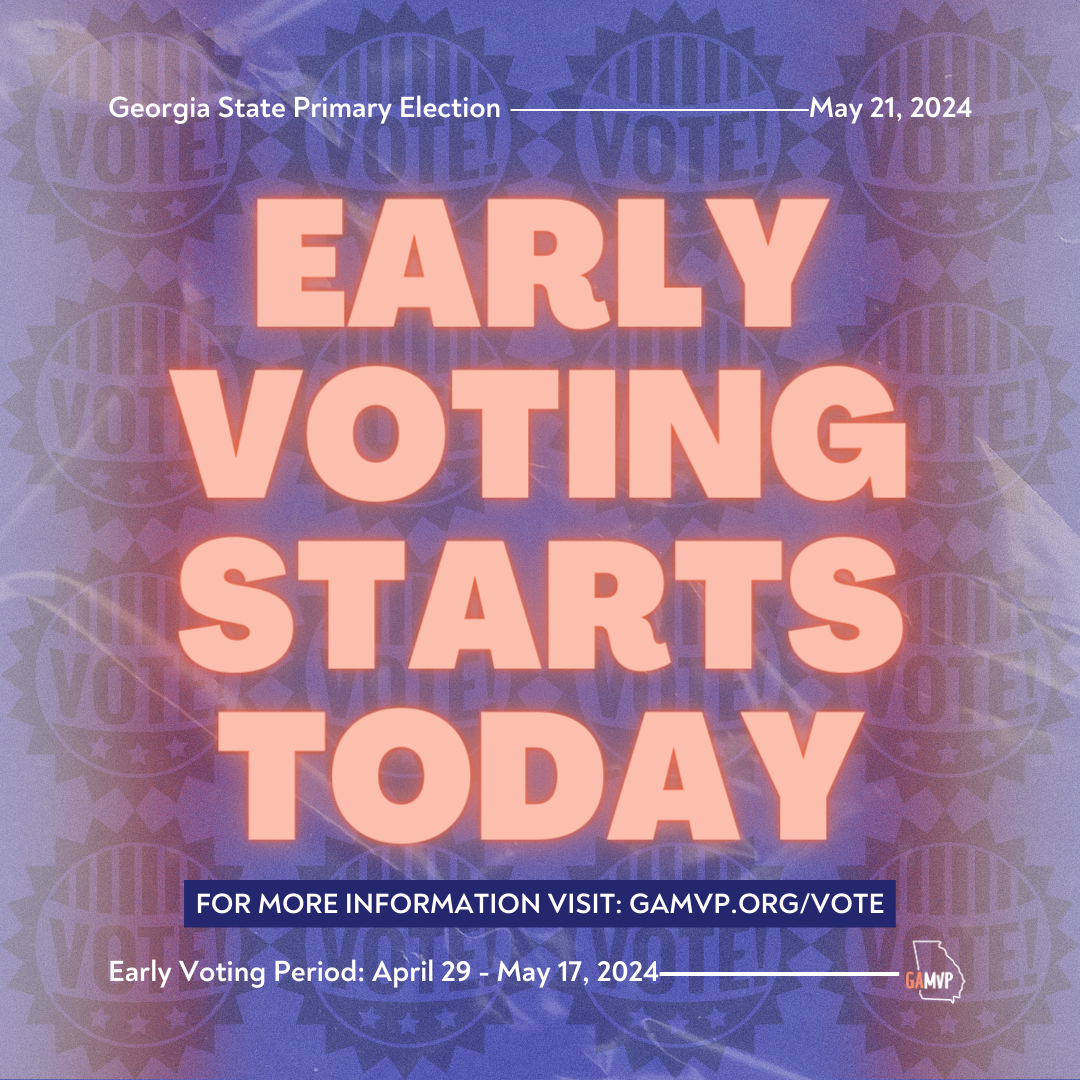
Figure 1: Early Voting post created by Urooj Ali for Georgia Muslim Voter Project
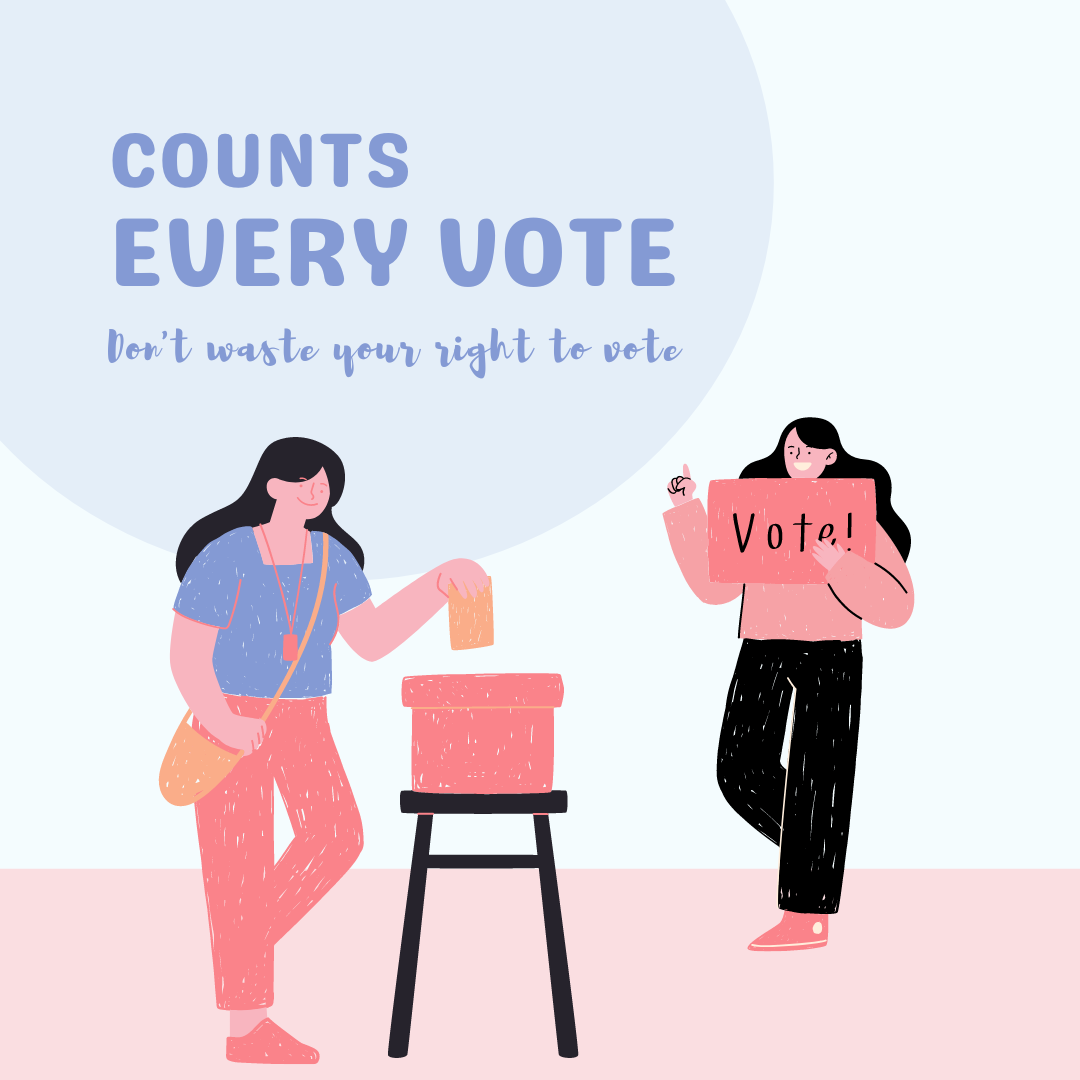
Figure 2: Canva template with Get-Out-the-vote messaging
Figure 1 clearly depicts the thought that went into creating this design. The composition of the graphic is balanced, the colors are attractive, the use of layering and texture is visible as well. This is a post that will make some stop and do a double take while doom scrolling. Conversely, the canva template depicts voting, but it is not engaging for the viewer at all. Specifically, the colors are not saturated, and the text is not presented as a unit. As a reader, I am placing unnecessary pause between “counts” and “every vote.” Plus, the typeface used for “don’t waste your right to vote” is difficult to read and not eye-catching.
Seeing the immense difference between these two graphics that are trying to get the same message across highlights the importance of visual thinking in the age of social media. A large component of design is sharing information in a way that is attractive and can evoke feeling and action. Figure 1 is appealing to their audience by using elements of design like color, texture, space, value, and line to their advantage. Figure 2 used the elements of design, but it doesn’t look intentional. These elements look haphazardly added to the design.
Visual thinking is a tool, but also a mindset. As a graphic designer, content specialist, and activist, I am always visually thinking. My goal is to drive my audience to engage and take action, and they will not do that if the design in front of them is not visually appealing. It is important to also realize that your audience is cosigning your posts when they like, comment, or share. Therefore, they will not engage with something lackluster misaligned with their personal design style. In order to effectively engage with the audience in the digital space, we must be visual thinkers, because reading is out and viewing is in.
by Urooj Ali
I live in a tornado of monotony. Some days, I don’t even notice color, let alone texture or shape. But lately, I’ve noticed a shift in perspective which has encouraged me to slow down, stop, and smell the roses.
Recently, I was stuck at George Bush International Airport due to a flight delay and in an effort to entertain myself, I went on a photo walk! I queued up my favorite playlist and set out to discover beauty in a sea of gray and white.
While airports around the world are transforming their halls to represent the culture and vibrancy of their cities, the same cannot be said for Houston’s George Bush International Airport. This truly feels like a missed opportunity considering Houston is the hometown of legends Beyoncé and Megan Thee Stallion, who are both featured in my daily playlist. Despite the lack of culture, I still managed to gather some unique content. Finding elements of design in such an ordinary place really opened my eyes to the way the elements communicate and create spaces that tell a story.


Figure 1 is a close up of a brick wall that belongs to the entrance of an airport bar. Including a faux brick wall in the design of this airport bar speaks volumes to the associations people have with drinking culture.The bricks may look real in this macro image, but if zoom out you’ll see that it is mimicking the exterior of building in the middle of the innocuous linoleum of Terminal B. While it is random, I automatically associated this installation with a drinking establishment because generally pubs and bars in downtown areas are brick buildings. This artifact tells a story. It evokes nostalgia and familiarity for the general crowd who is passing by this establishment. The use of texture on this brick wall installation made me think about my design style, because I have a habit of adding texture to every design I create.
Figure 2 is a close up of the pattern on a chair at the gate. As a regular traveler, I never notice the details that are present in places like the airport. I was pleasantly surprised by the detail these chairs have.I never thought an airport architect would think about having a chair with a design element like this. As mundane as it is, this line design on the airport chair still tells a story. It makes me wonder, what is the significance of this chair? Why was this seat chosen? What message was Houston trying to send to its temporary guests? The airport is a transient location. Can the inclusion of design among the mundane help people feel at home?
Spending hours alone in an airport allowed me to see beauty where I might not have before. I was able to be inquisitive and take pictures of mundane items but appreciate the thought and design that went into creating this brick wall or airport chair. The airport is an anxiety inducing place. With security, a time crunch, and distance from home, it is rare to stop and appreciate the beauty that exists at an airport. This felt like a eureka moment, I thought “why don’t more people appreciate the small existence of beauty at the airport?” I wanted to shout it from the rooftops! “Look how GORGEOUS the pattern on this carpet is!” Of course, I cannot scream in an airport without triggering a national security threat. So, I chose to share my photo online and potentially trigger the inquisitive nature in my peers as well. As artists and designers, how do we continue to nurture our curious minds?
